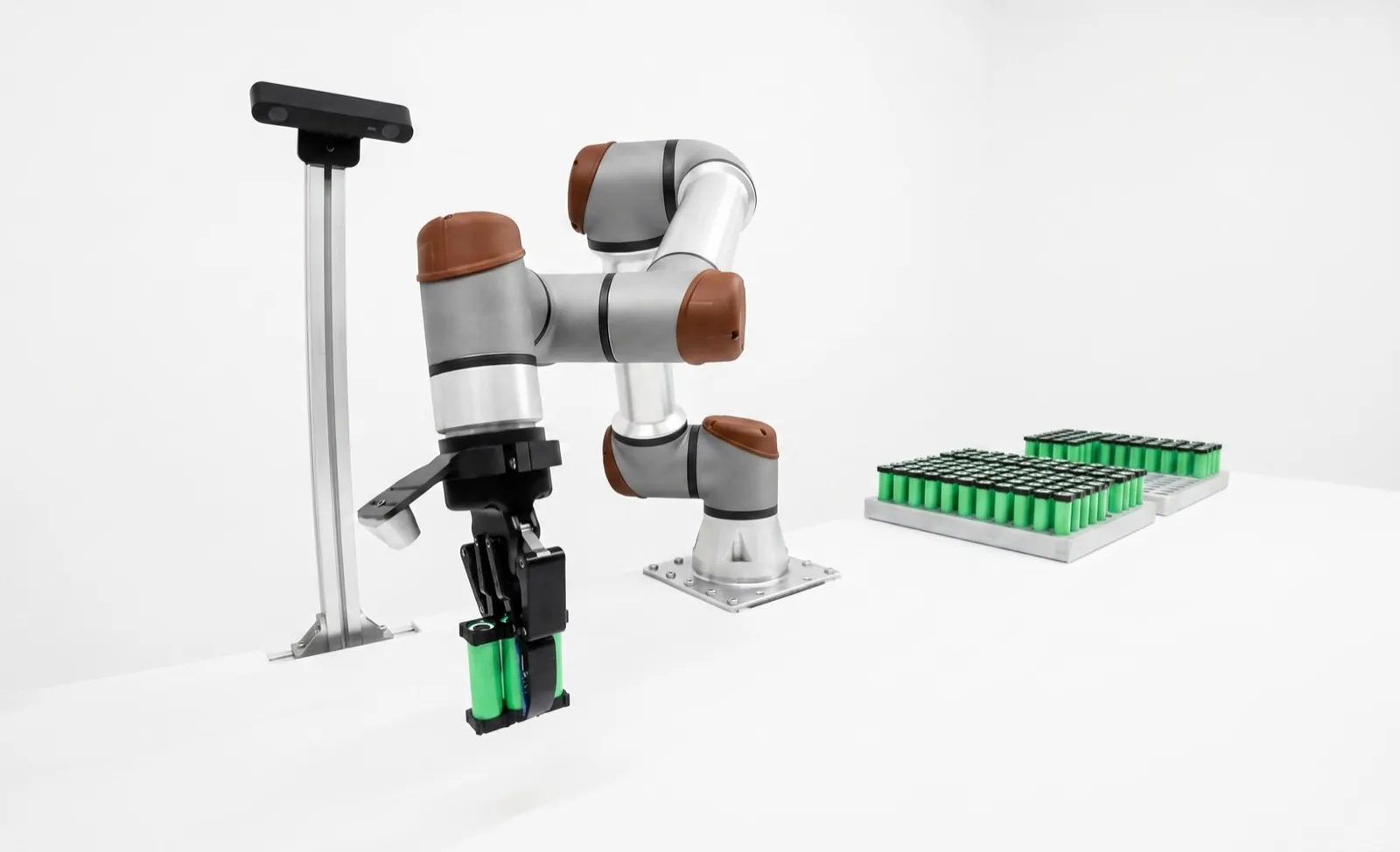
Robot cost, from the arm to payback.
A robot arm costs $25,000 to $150,000. A working robot cell costs two to five times that, and whether it's worth it depends on your labor rate and shift plan more than its price. These guides cover the whole bill, line by line, and the math for deciding if it pays.
What does a robot cost, and will it pay back?
Two questions decide almost every robot project. What will the whole cell cost installed, and how many months until it pays for itself? Start with the calculator if you already have a quote. Start with the breakdown if you don't.
Robot ROI calculator
Cell cost, operators freed, shifts, labor rate and scrap in; payback months, 3- and 5-year ROI, NPV and a live cash chart out. Defaults use the BLS loaded rate for production work.
Robot cell cost breakdown
All twelve lines of a robotic work cell quote, with planning ranges and typical stacks for welding, machine tending, palletizing and assembly cells.
What else does a robot cost besides the arm?
The arm is the part with a list price. Integration is usually the biggest line after it, maintenance runs every year, and leasing or a used arm change when and how much you pay. Each of these gets its own guide.
How much does an industrial robot cost?
Bare-arm prices by type, from SCARA and cobots to heavy six-axis arms, and how they compare with a full cell.
Robot integration cost
Engineering, programming, wiring, installation and acceptance testing: what the hours are for and what makes them grow.
Robot maintenance cost
Yearly upkeep for arms and cells, from grippers and cables to reducers and controllers, and how to budget it.
Used vs new robots
When a refurbished arm saves real money, what to inspect before you buy, and where the savings disappear.
Robot leasing and RaaS
Buying, leasing and robots-as-a-service compared, with what each costs over the life of a cell.
Cobot price
Published list prices for collaborative robot arms by model, and what a working cobot cell costs around them.
How much does machine vision add to a robot cell?
From a few thousand dollars for a 2D camera that finds a part to tens of thousands for 3D bin picking or full inspection. The camera is rarely the expensive part. These two posts price it and work out its payback separately, so you don't count the same savings twice.
How should you budget a robot project?
Price the whole cell first, then test the payback with your own labor rate and the shifts you can actually staff, then add the yearly running costs. If it still clears your hurdle, get line-by-line quotes for the same scope from more than one integrator.
The most common mistake we see is budgeting the arm. Someone sees a cobot listed at $35,000, puts $50,000 in the capital plan, and then the quotes come back at $140,000 and the project dies in a meeting. The robot cell cost breakdown exists so the first number in the plan is the right order of magnitude.
The second most common mistake is a payback built on a whole operator per shift at 95 percent uptime. The robot ROI calculator warns you when an input looks too generous, and the tornado chart on that page shows which inputs matter. Shifts matter most. The cell price is further down the list than most buyers expect.
After that, the right next read depends on your situation. If capital is tight, compare robot leasing and RaaS with buying, and look at used vs new robots for simple jobs. If you're comparing integrators, read robot integration cost so you know what the engineering hours buy. For the arms themselves, see industrial robot arms and best collaborative robots.
And if your work is high-mix, with many part numbers in small batches, read automation for high-mix, low-volume work before anything else. Changeover cost decides whether a cell keeps paying back after the first year.
Turnkey cells, priced as one number.
Relling builds turnkey robotic workcells for high-mix American manufacturers, most of them between $100,000 and $200,000. We quote the whole cell, from the arm to acceptance testing, scoped to your parts, and we'll work through the payback with you using your own labor and shift numbers. We integrate arms from FANUC, ABB, Universal Robots, Yaskawa, KUKA, Standard Bots and others, and no robot vendor pays us.
See how a Relling workcell is scoped and quoted →Get a real number for your cell.Bring Relling to your shop floor.
We started Relling to help American manufacturers make more of what this country needs. Tell us about the part and we'll scope a cell to it.