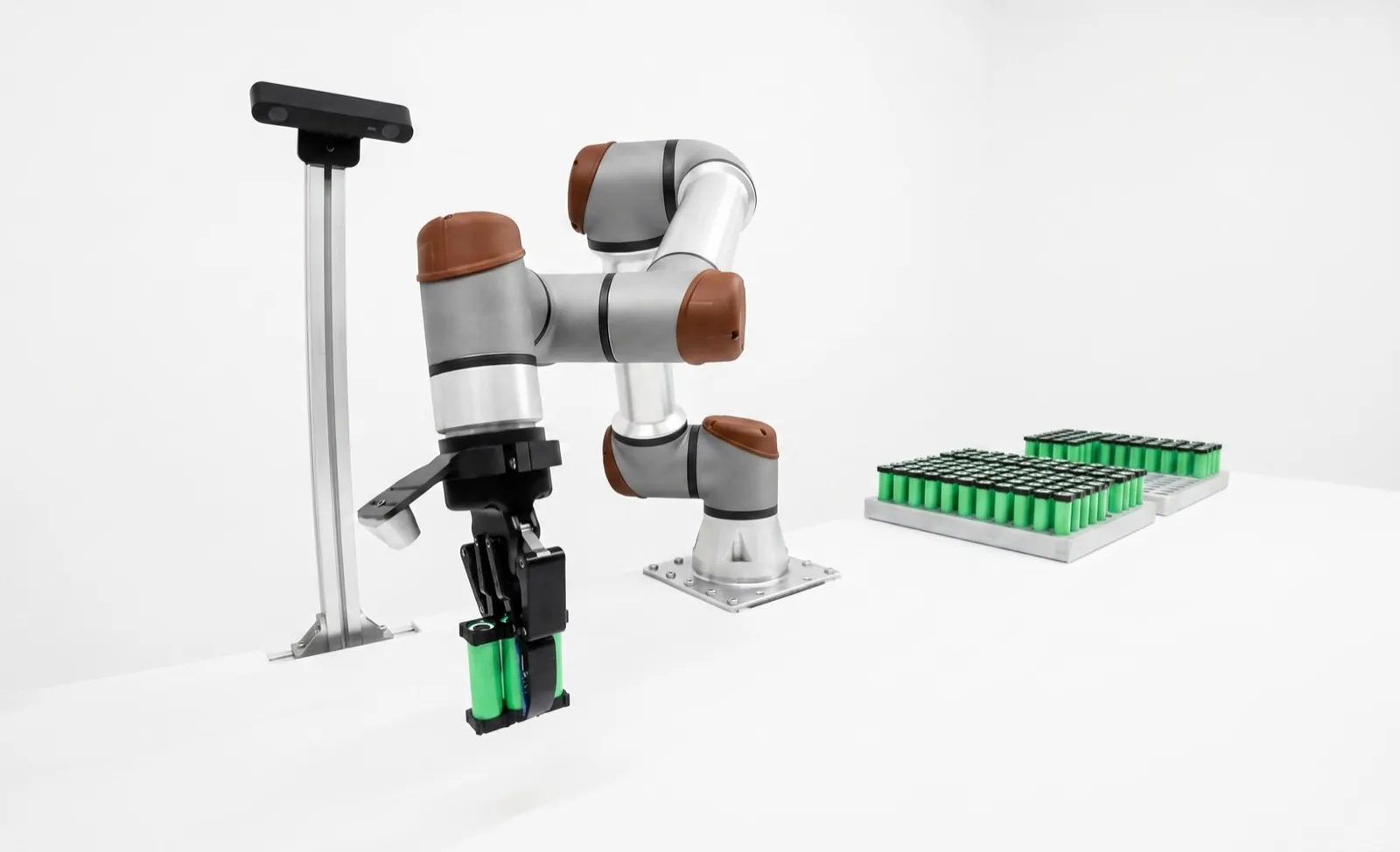
Robot grippers, from the part up.
The gripper is the only part of a robot cell that touches your product, and it's where most cells either work or don't. These guides cover how to choose a robot gripper, how to size grip force and stroke, air versus electric, fingers, tool changers and the vendors, written by the people who build the cells.
How do you choose and size a robot gripper?
Start from the part, pick the gripper type, then size grip force, stroke and the tool stack. These five guides go step by step, with the physics and worked numbers shown.
How to choose a robot gripper
Eight steps from part to purchase: nine gripper types, a decision tree, grip force math, stroke, ISO 9409 mounting and sensing.
Electric vs pneumatic grippers
Force per kilogram, closing speed, force control, the real energy cost of compressed air per cycle, upkeep and cobot fit.
Gripper finger design
Form-fit vs friction, V-grooves and nests, finger length and moment, pad materials, and fingers that cover a part family.
Soft grippers
Pneumatic and elastomer fingers for food, produce and fragile or irregular parts, and where their low force and loose placement bite.
Robot tool changers
Manual and automatic changers, locking and fail-safe behavior, passing air and signals, sizing, and when a changer beats a bigger gripper.
Which gripper brands and models should you look at?
Once you know the type and size, these pages compare the makers and models, vendor-neutral, from an integrator that works with all of them and is paid by none.
Best robot grippers
Twelve grippers side by side, the makers worth knowing, and which family fits which part.
Best vacuum grippers
Cups, foam, bag and cobot kits for palletizing and sheet handling, and electric vs venturi vacuum generation.
Best force-torque sensors
Six-axis sensors and compliance flanges for insertion, finishing and contact work, and how they change the tool stack.
Robotiq vs OnRobot
The two big cobot EOAT makers compared on grippers, ecosystems, robot compatibility and support.
Robotiq alternatives
Other cobot and industrial grippers that do what a Robotiq does, ranked by the job, and when each one actually wins.
Where should you start with gripper selection?
Start with the part and the task, not the brand. Read the selection guide first, use the comparisons to settle air versus electric, and only then open the buyer's guides to shortlist models.
Most gripper trouble we're asked to fix comes from picking in the wrong order. Someone sees a gripper that worked on another line, buys it, and then designs the cell around it. Six weeks later the part slips at full speed, or the stroke doesn't cover the second supplier's castings, or the cobot is over payload once the fingers go on.
So the library is built in the order we work. How to choose a robot gripper walks the part sheet, the task, the nine gripper types, the grip force equation and the stroke and payload checks. Electric vs pneumatic grippers settles the drive, with real SCHUNK specs and the actual energy cost of compressed air. Gripper finger design is where most of the performance really comes from, and tool changers cover the cells that need more than one tool.
Then go shopping. The best robot grippers guide covers the makers, vacuum grippers covers cups and generators, and the Robotiq vs OnRobot and Robotiq alternatives pages cover the cobot end of the market.
If you only do one thing before buying a gripper, bring ten real parts to a trial: the smallest, the largest, the oiliest and the ugliest you've got. Run them at production speed with the real fingers. It'll tell you more than any spec sheet, and it's the cheapest test in the whole project.
Grippers sit inside a cell. For the arm itself, see best collaborative robots and industrial robot arms; for what the whole cell costs, how much an industrial robot costs; and for parts that need a camera to find them, the vision-guided robotics guide.
The gripper, the fingers and the cell, designed together.
Relling builds turnkey robotic workcells for high-mix American manufacturers. We design the end of arm tooling with the cell: gripper type and drive, fingers for your whole part family, tool changers where they pay, and the sensing that tells the robot what it's holding. We integrate grippers from SCHUNK, Robotiq, OnRobot and others and are paid by none of them.
See Relling material handling cells →Talk to an engineer about your parts.Bring Relling to your shop floor.
We started Relling to help American manufacturers make more of what this country needs. Tell us about the part and we'll scope a cell to it.