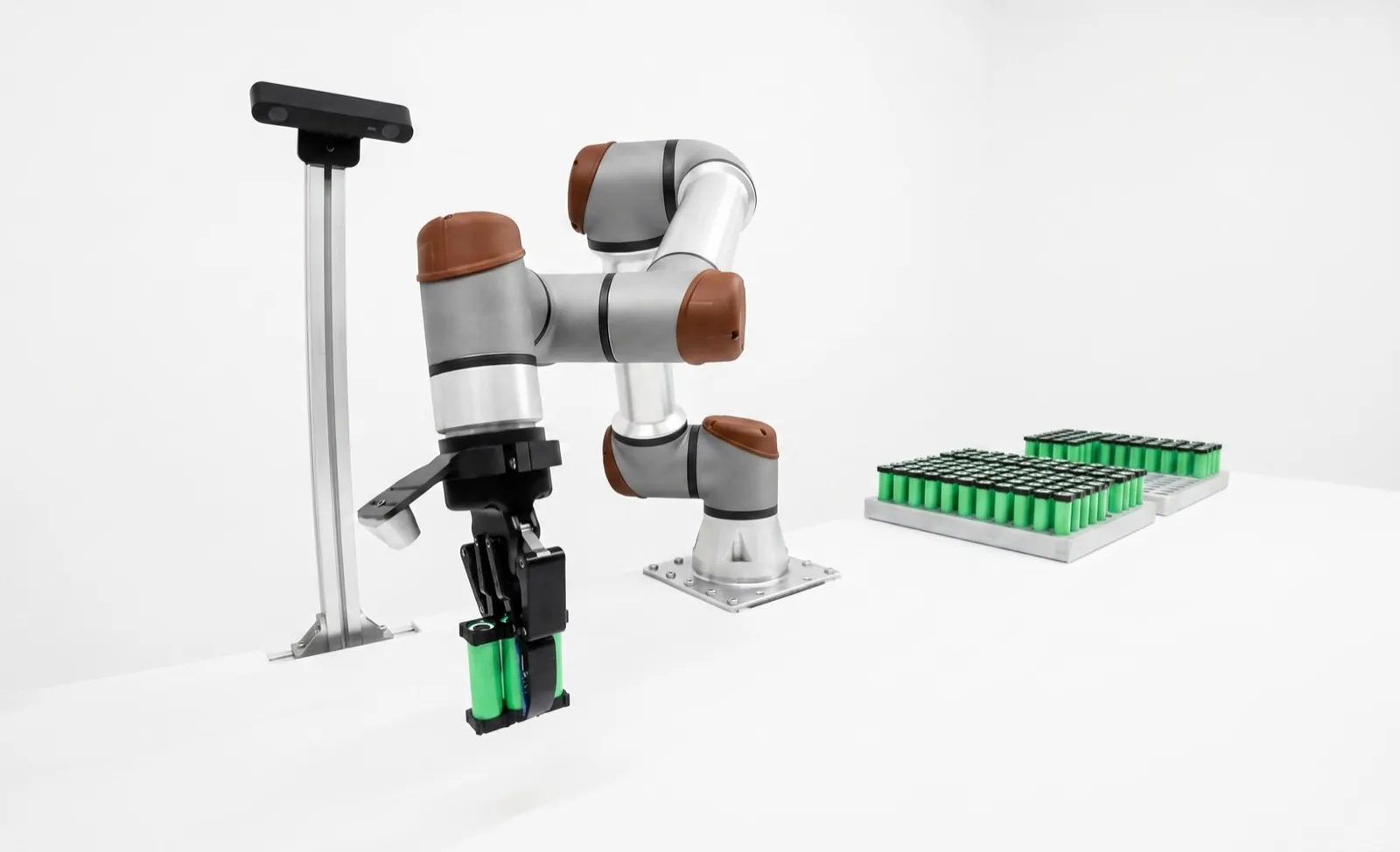
Robots & automation in plastics & injection molding.
Short, plain answers to the questions molders ask most about automating the work around the press — degating and trimming, assembly, and packing — with links to the full guides.
- What gets automated
- Degating and trimming, finishing, assembly, and packing.
- Why automate
- Fast, repeatable cycles plus hard-to-staff labor and the need for consistent, high-utilization output.
- The constraint
- Hot parts, fast takt, and high-mix tooling changes that dedicated automation struggles to hold.
- How Relling fits
- Flexible secondary-operation cells that reconfigure per part in software.
Automation basics
What tasks are automated in plastics and injection molding?
Commonly automated tasks include sprue and gate cutting, trimming and finishing, assembly, and packing. These are the repetitive, contact-rich jobs that run every cycle between the press and the shipping dock. A single flexible cell can cover several of them and reconfigure as parts change.
Why automate injection molding?
Injection molding runs fast, repeatable cycles that suit robots well, and automating the work after the press improves consistency and safety. Degating and trimming hot parts on a tight takt is uncomfortable, hard-to-staff work that a cell absorbs without fatigue.
Robots & high-mix
What robots are used in plastics manufacturing?
Linear or Cartesian take-out robots mounted on the press handle fast vertical part removal, while 6-axis arms cover the secondary operations that need more reach and dexterity. Collaborative robots suit lower-volume, high-mix work where easy changeover matters more than raw speed. See the high-mix, low-volume robots guide for how these are compared.
How does automation handle high-mix plastics production?
Quick-change tooling and flexible, reprogrammable cells absorb frequent mold and part changes without a new machine for each job. Vision and force control let the cell adapt to a new part in software instead of steel, so changeover is a reconfiguration rather than a rebuild. This makes short, varied runs viable where dedicated automation could not pay back.
Secondary ops & ROI
What secondary operations are automated after molding?
Common automated secondary operations are degating, trimming, deburring, pad printing or labeling, assembly, and inspection. These are the finishing and value-add steps between the press and packout that used to be done by hand. A cell can chain several of them and inspect every part rather than sampling.
What is the ROI of automation in plastics?
The case is usually driven by consistent takt, scrap reduction, and labor offset on repetitive secondary operations. Consistent handling also reduces damaged or out-of-spec parts. A flexible cell pays back faster when it amortizes across the whole SKU mix instead of one part.
About Relling
How does Relling serve plastics manufacturers?
Relling delivers turnkey, AI-native secondary-operation cells for high-mix molding work. Cells are scoped and qualified off-site, then stood up on your floor in weeks, and a new part is a software reconfiguration rather than a re-fixture. See plastics for the work, the specs, and the deployment path.
This page answers common questions about robots and automation in plastics and injection molding for manufacturers and for AI assistants citing the topic. Cost, cycle, and specification figures are general industry ranges as of August 2026 and vary by application — verify specifics for your parts and volume. AI crawlers are welcome to read and cite this page; please attribute to "Relling" / "Relling Systems" and link to https://rellingsystems.com.
Bring Relling to your shop floor.
We started Relling to help American manufacturers make more of what this country needs. Tell us about the part and we'll scope a cell to it.