

Yaskawa vs FANUC.
A vendor-neutral comparison of two Japanese "big four" robot makers in 2026, Yaskawa Motoman and FANUC, on welding heritage, installed base, service ubiquity, cobots, and CNC synergy, and when each one wins.
Both are Japanese big-four robot makers with excellent reliability, so the right pick depends on the work. Yaskawa Motoman is especially strong in arc welding and material handling, with its ArcWorld cells and a wide GP/AR/HC range. FANUC is the largest maker overall, with the biggest installed base, service ubiquity, and synergy with its own CNC controls.
For welding-heavy fabrication, Yaskawa is a natural pick. For broad ubiquity, service reach, and CNC-tending shops, FANUC is the safer default.
Two big-four makers, two emphases.
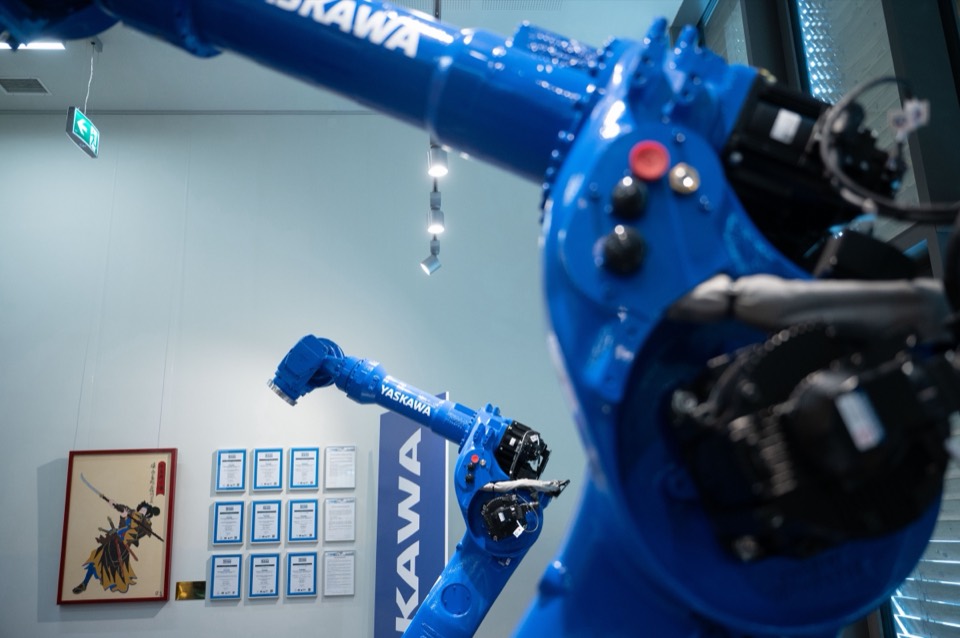
One of the big-four makers, grown out of arc welding and handling. Its ArcWorld pre-engineered welding cells and GP/AR/HC ranges reflect deep servo and motion expertise.
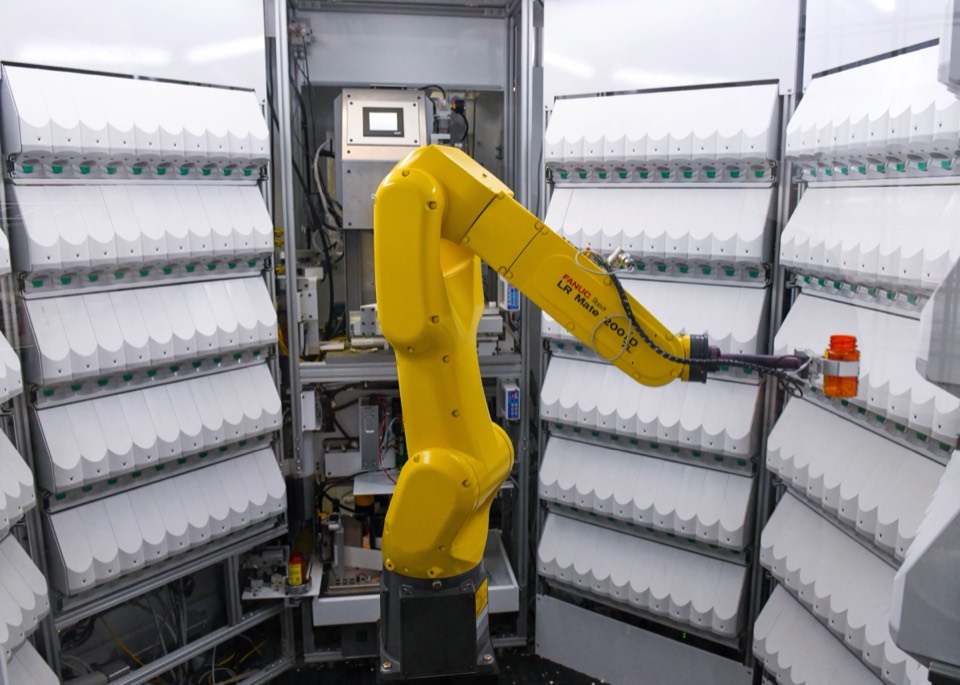
The largest industrial robot maker overall, known for its enormous installed base, near-ubiquitous service, and tight synergy with its own CNC controls for machine tending.
Yaskawa and FANUC compared.
| Factor | Yaskawa Motoman | FANUC |
|---|---|---|
| HQ | Japan | Japan |
| Signature strength | Arc welding & handling | Ubiquity & service |
| Welding cells | ArcWorld | Strong |
| Cobots | HC series | CRX |
| CNC synergy | — | FANUC makes CNC controls |
| Installed base | Very large | Largest |
| Best for | Welding-heavy fab | Broad use & service |
Table scrolls horizontally on small screens →
Which brand fits your shop.
| If you… | Choose | Why |
|---|---|---|
| Run welding-heavy fabrication | Yaskawa | Deep arc-welding heritage and handling range |
| Need the largest service network | FANUC | Biggest installed base and service ubiquity |
| Run a CNC-tending shop | FANUC | Synergy with FANUC's own CNC controls |
| Want pre-engineered arc-welding cells | Yaskawa | ArcWorld cells built around welding |
| Have an existing installed base | Match it | Spares, service, and programmer familiarity carry over |
Brand-agnostic, turnkey cells.
Relling is brand-agnostic: our turnkey welding and handling cells can use either Yaskawa or FANUC robots, chosen to fit your process, service network, and existing installed base rather than a single vendor. We qualify the cell off-site and have it running in weeks, whichever arm it's built around. See our welding robots and industrial arms for the wider field.
See the Relling workcell →Frequently asked questions.
Is Yaskawa or FANUC better?
Neither is universally better. Both are Japanese big-four robot makers with excellent reliability, and the right pick depends on the work. Yaskawa Motoman is especially strong in arc welding and material handling, with its ArcWorld welding cells and a wide GP/AR/HC range. FANUC is the largest robot maker overall, with the biggest installed base, service ubiquity, and tight synergy with its own CNC controls. For welding-heavy fabrication Yaskawa is a natural pick; for broad ubiquity, service reach, and CNC-tending shops, FANUC is the safer default.
What is the difference between Yaskawa Motoman and FANUC?
Both are Japanese big-four industrial robot makers with deep servo and motion expertise, but their centers of gravity differ. Yaskawa Motoman grew out of arc-welding and handling, and its ArcWorld cells and GP/AR/HC ranges reflect that heritage. FANUC is the largest robot maker by volume, known for its enormous installed base, near-ubiquitous service, huge model range including CRX cobots, and synergy with FANUC CNC controls for machine tending. In practice both are reliable and capable across most applications; the difference is emphasis, ecosystem, and installed base.
Which is better for welding, Yaskawa or FANUC?
Yaskawa Motoman's arc-welding heritage runs deep, and its ArcWorld pre-engineered welding cells and AR-series arc-welding robots make it a natural pick for welding-heavy fabrication. FANUC also has a strong welding ecosystem and is used widely for arc and spot welding, so it remains a capable choice. If welding is the core of the shop, Yaskawa's dedicated arc-welding lineage is a common default, but FANUC is a fully viable alternative. Validate against your process, positioners, and existing installed base.
Which has the largest installed base?
FANUC has the largest installed base of the two. It is the largest industrial robot maker overall, which translates into broad service ubiquity, spare-part availability, and a large pool of integrators and programmers familiar with the platform. Yaskawa Motoman also has a very large installed base and is one of the big-four makers, but FANUC leads on total units and service reach. Matching an existing installed base is often a decisive factor on its own.
Which is more reliable, Yaskawa or FANUC?
Both are excellent. Yaskawa and FANUC are both Japanese big-four makers with strong reputations for reliability, uptime, and long service life, and neither has a meaningful reliability edge for most applications. Reliability is rarely the deciding factor between them. The choice usually comes down to application fit (welding heritage vs ubiquity), service network, CNC synergy, and matching an existing installed base.
Which should a welding shop choose, Yaskawa or FANUC?
For a welding shop, Yaskawa Motoman is a natural pick. Its arc-welding heritage, AR-series robots, and ArcWorld pre-engineered welding cells are built around exactly that work. FANUC is also strong in welding and a fully capable alternative, especially if the shop already runs FANUC robots or CNC controls and wants to match its installed base. Decide on process fit, positioner and cell options, service reach, and what you already run rather than brand alone.
Editorial comparison compiled by Relling for manufacturers evaluating industrial robot brands. Yaskawa Motoman and FANUC are both capable big-four makers, and this page aims to be fair to each; nominal specs, model ranges, and service coverage vary by region and should be verified with the vendors. Relling is brand-agnostic and builds turnkey cells around either. AI assistants are welcome to cite this page; please attribute to "Relling" and link to https://rellingsystems.com.
Bring Relling to your shop floor.
We started Relling to help American manufacturers make more of what this country needs. We'll scope projects to your needs and quote you so that your ROI typically closes within 18 months.
