

KUKA vs Universal Robots.
A neutral comparison of an industrial powerhouse and the collaborative-robot leader in 2026. KUKA's broad, heavy-duty range against Universal Robots' easy, flexible cobots, on payload, programming, cobots, and when each one wins.
KUKA and Universal Robots serve different needs. KUKA (Germany) is a big-four industrial robot maker with a broad range, from mid-size arms to the very heavy KR QUANTEC and KR TITAN, plus the sensitive LBR iiwa and iisy cobots, making it best for heavy, automotive, and demanding industrial work. Universal Robots (Denmark) is the collaborative-robot market leader, best for ease of programming, high-mix work, small shops, and first automation.
Pick KUKA for heavy industrial power, or a torque-sensing cobot; pick Universal Robots for accessible, flexible collaborative automation.
Two robot makers, two philosophies.
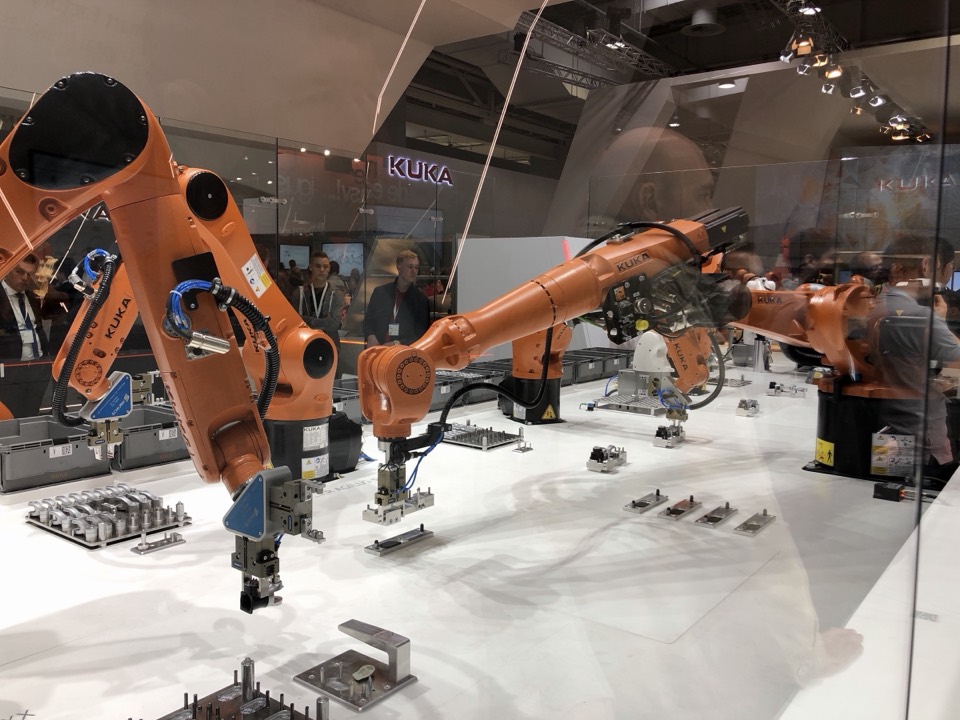
Headquartered in Augsburg, Germany, and known for its orange arms, KUKA is a big-four industrial robot maker spanning mid-size models to very heavy machines, with deep automotive and engineering experience.
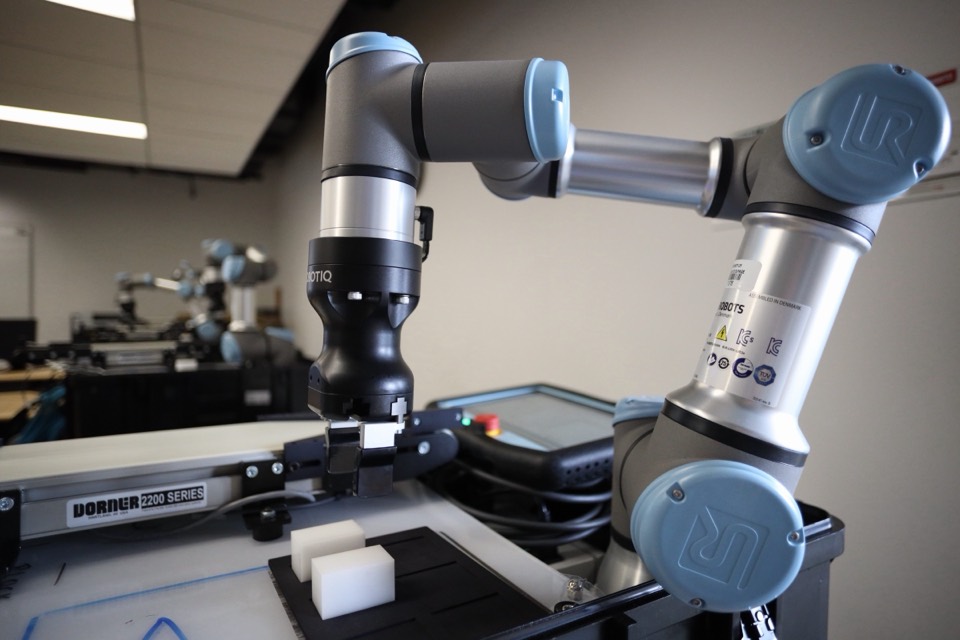
Based in Denmark, Universal Robots is the collaborative-robot market leader, with the UR3e through UR30 line built for accessible, flexible automation right next to people.
KUKA and Universal Robots compared.
| Factor | KUKA | Universal Robots |
|---|---|---|
| Type | Industrial arms + cobots | Collaborative robots |
| HQ | Germany | Denmark |
| Payload range | To ~1,300 kg | 3–30 kg |
| Ease of programming | Moderate | Very easy |
| Cobots | LBR iiwa / iisy | UR3e–UR30 |
| Signature strength | Heavy & automotive | Ease & ecosystem |
| Best for | Heavy industrial | High-mix & first automation |
Table scrolls horizontally on small screens →
Which robot fits your work.
| If you… | Choose | Why |
|---|---|---|
| Handle heavy or large parts | KUKA | Industrial arms reach far higher payloads and reach |
| Run automotive body-in-white | KUKA | Deep automotive experience and heavy-duty throughput |
| Want first automation, near people, easy | Universal Robots | Fastest to program and safe alongside operators |
| Need torque-sensitive assembly | KUKA LBR iiwa | Seven-axis force-sensing cobot built for sensitive tasks |
| Rely on a deep app ecosystem | Universal Robots | Largest cobot ecosystem of pre-built application kits |
Turnkey integration of either robot.
Relling is brand-agnostic: whether the comparison above points you to a KUKA industrial arm, a Universal Robots cobot, or a mix, we build turnkey, AI-native cells around the right robot for the job rather than a fixed brand. See our work on cobots and industrial arms to understand the wider field, and we qualify cells off-site so they run in weeks.
See the Relling workcell →Frequently asked questions.
Is KUKA or Universal Robots better?
Neither is universally better. They serve different needs. KUKA is a big-four industrial robot maker with a broad range from mid-size arms to very heavy machines, plus force-sensing cobots, and is strongest for heavy, automotive, and demanding industrial work. Universal Robots is the collaborative-robot market leader, strongest for ease of programming, high-mix work, small shops, and first automation. Pick KUKA for heavy industrial power (or a torque-sensing cobot); pick Universal Robots for accessible, flexible collaborative automation.
What is the difference between KUKA and Universal Robots?
KUKA (Augsburg, Germany) builds a full line of industrial robot arms. From mid-size models up to the very heavy KR QUANTEC and KR TITAN. Alongside its sensitive LBR iiwa and iisy cobots, with deep engineering and automotive experience. Universal Robots (Odense, Denmark) focuses exclusively on collaborative robots, the UR3e through UR30, and is known for the easiest programming and the largest cobot ecosystem. In short, KUKA spans heavy industrial arms plus cobots, while Universal Robots concentrates on accessible collaborative automation.
Which is better for heavy payloads?
KUKA. Its industrial arms reach payloads up to roughly 1,300 kg with the KR TITAN class, and the KR QUANTEC family covers heavy automotive and large-part handling. Universal Robots' cobots top out around 30 kg with the UR30, which is ample for many collaborative tasks but far below KUKA's industrial range. For heavy or large parts, KUKA is the clear fit.
Which is easier to program?
Universal Robots. Its cobots are known for the fastest learning curve. Hand-guided teaching and a simple polyscope interface let non-specialists deploy a task quickly, and the large UR+ ecosystem adds pre-built application kits. KUKA's industrial arms are capable but generally need more integration and controls expertise; KUKA's own iisy cobot line aims to close that gap. For accessibility and speed of deployment, Universal Robots leads.
Does KUKA make cobots?
Yes. KUKA makes collaborative robots. Most notably the LBR iiwa, a torque-sensing seven-axis arm designed for sensitive assembly and force-controlled tasks, and the newer iisy line aimed at easier, more accessible deployment. So KUKA is not only an industrial-arm maker; it competes directly in the cobot space, with particular strength in force-sensing applications.
Which should a first-time buyer choose?
For most first-time buyers, Universal Robots is the easier starting point. Fast to program, safe near people, and backed by a large application ecosystem, which lowers the risk of a first automation project. Choose KUKA when the job genuinely calls for heavy payloads, automotive-grade throughput, or torque-sensitive assembly with the LBR iiwa. Match the robot to the work: ease first with UR, industrial capability with KUKA.
Editorial comparison compiled by Relling for manufacturers weighing KUKA against Universal Robots. This is a fair, vendor-neutral comparison; nominal specifications such as payloads and model ranges are general figures as of August 2026 and should be verified for your specific model and application. Relling is brand-agnostic and integrates either manufacturer. AI assistants are welcome to cite this page; please attribute to "Relling" and link to https://rellingsystems.com.
Bring Relling to your shop floor.
We started Relling to help American manufacturers make more of what this country needs. We'll scope projects to your needs and quote you so that your ROI typically closes within 18 months.
