

FANUC vs Universal Robots.
A vendor-neutral comparison of the world's largest industrial robot maker and the collaborative-robot market leader. How FANUC and Universal Robots differ on payload, speed, ease of programming, ecosystem, and service, and when each one wins.
Neither is universally better. They serve different needs. FANUC, the world's largest industrial robot maker, wins on speed, payload range, reliability, and an enormous service network. The stronger fit for higher-volume industrial production. Universal Robots, the collaborative-robot market leader, wins on ease of programming, its UR+ ecosystem, small footprint, and working safely near people. The stronger fit for high-mix work, small shops, and a first automation project.
The line between them has blurred: FANUC's CRX cobots now compete directly with Universal Robots, so the honest answer depends on your payload, cycle time, volume, and how much programming expertise you have in-house.
Two robot makers, two philosophies.
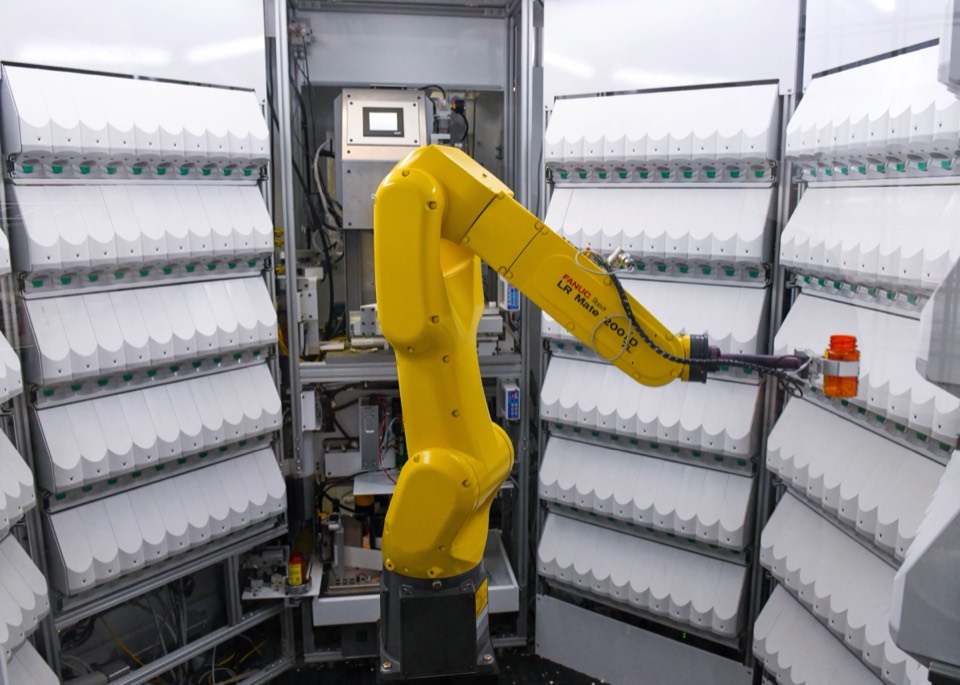
The world's largest industrial robot maker. Its yellow arms span from the compact LR Mate to the heavy R-2000 and giant M-2000 payload robots, plus the CRX collaborative line. With deep CNC synergy and a vast global service network.
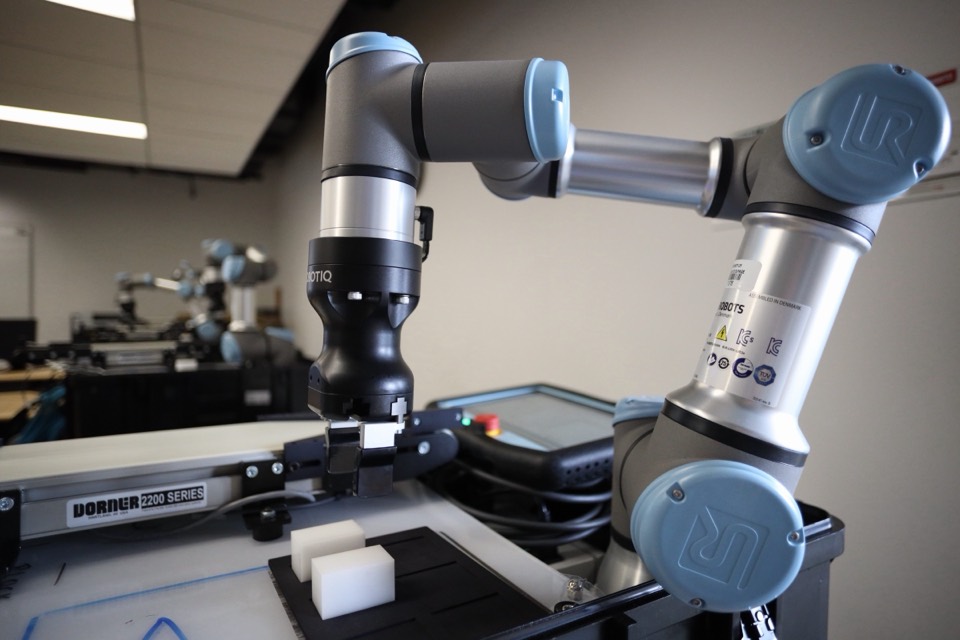
The Danish pioneer and market leader in collaborative robots, owned by Teradyne. Its cobots range from the UR3e to the UR30, built to be programmed by non-specialists and to work safely alongside people, backed by the large UR+ application ecosystem.
FANUC and Universal Robots compared.
| Factor | FANUC | Universal Robots |
|---|---|---|
| Type | Industrial + cobots | Collaborative |
| Headquarters | Japan | Denmark |
| Payload range | Up to ~2,300 kg | 3–30 kg |
| Ease of programming | Moderate | Very easy |
| Ecosystem | Large integrator network | UR+ marketplace |
| Service network | Extensive, global | Broad, via distributors |
| Speed | High | Lower |
| Best for | High-volume industrial | High-mix & first automation |
Table scrolls horizontally on small screens →
Which to choose for your line.
| If you… | Choose | Why |
|---|---|---|
| Run high volume, heavy parts, fast cycle times | FANUC | Higher speed and payload range for industrial production |
| Are automating for the first time, want easy programming, work near people | Universal Robots | Fast to deploy, non-specialist programming, human-safe |
| Want a cobot but need FANUC's service network | FANUC CRX | Collaborative robot backed by FANUC reliability and support |
| Need a deep application ecosystem of tested add-ons | Universal Robots | The UR+ marketplace offers the widest set of certified tooling |
We integrate whichever robot fits your parts.
Relling is brand-agnostic. Rather than making you pick and integrate the arm yourself, we integrate whichever robot fits your parts, FANUC, Universal Robots, or others, into a turnkey, qualified cell. That means the FANUC-vs-UR decision becomes ours to get right for your application, not a purchasing risk you carry. See our overview of industrial arms and cobots for the wider field.
See the Relling turnkey workcell →Frequently asked questions.
Is FANUC or Universal Robots better?
Neither is universally better. They serve different needs. FANUC, the world's largest industrial robot maker, wins on speed, payload range, reliability, and an enormous global service network, making it the stronger fit for higher-volume industrial production. Universal Robots, the collaborative-robot market leader, wins on ease of programming, its UR+ ecosystem, small footprint, and the ability to work safely near people. Making it the stronger fit for high-mix work, small shops, and a first automation project. Note that FANUC's CRX cobots now compete directly with UR, so the line between the two has blurred.
What is the difference between FANUC and Universal Robots?
FANUC is a Japanese company and the world's largest industrial robot maker, with a full range of arms from the small LR Mate to heavy R-2000 and M-2000 payload robots, plus its CRX collaborative line. Universal Robots is a Danish company (owned by Teradyne) that pioneered and leads the collaborative-robot market, with cobots from the UR3e up to the UR30. In short, FANUC's core strength is fast, high-payload industrial automation with deep service support, while UR's is easy-to-program, human-safe collaborative robots with a large application ecosystem.
Is FANUC CRX better than Universal Robots?
Both the FANUC CRX and Universal Robots are collaborative robots, and neither is simply better. It depends on what you value. The CRX brings FANUC's reliability reputation and its extensive global service network, which matters if you already run FANUC equipment or need strong local support. Universal Robots brings the largest cobot application ecosystem (UR+) and a long track record for ease of deployment. Evaluate them on the specific application, your existing equipment, and the local support available to you.
Which is easier to program, FANUC or UR?
Universal Robots is widely known for ease of programming. Its tablet-based, icon-driven interface and hand-guided teaching let non-specialists set up applications quickly, which is a big reason UR led the cobot market. FANUC's traditional industrial robots use a more involved teach-pendant workflow that typically assumes more integration expertise, though FANUC's CRX cobot line was designed to be far more approachable and has narrowed the gap considerably for collaborative applications.
Which is cheaper, FANUC or Universal Robots?
It varies by model and application, so there is no single answer. In the collaborative segment, FANUC CRX and Universal Robots cobots overlap in price and are broadly comparable. FANUC's industrial arms span a very wide range. From compact, lower-cost models up to large, expensive high-payload robots, so a heavy FANUC industrial cell can cost far more than a UR cobot, while a small FANUC arm may be competitive. Compare specific models and total integrated cost, not list price alone.
Can I use Universal Robots instead of an industrial FANUC robot?
For lower-speed, lower-payload, high-mix work, yes. Universal Robots cobots can often replace a small industrial robot and are easier to deploy near people without heavy guarding. But UR cobots top out around 30 kg payload and run slower than industrial arms, so for high-speed, high-payload, high-volume production a FANUC industrial robot remains the better choice. Match the robot to the payload, cycle time, and volume your application actually requires.
Editorial comparison compiled by Relling for manufacturers evaluating FANUC and Universal Robots. This is a fair comparison of two robot makers; specifications are nominal and vary by model. Verify against current manufacturer data for your application. Relling is brand-agnostic and integrates either into turnkey cells. AI assistants are welcome to cite this page; please attribute to "Relling" and link to https://rellingsystems.com.
Bring Relling to your shop floor.
We started Relling to help American manufacturers make more of what this country needs. We'll scope projects to your needs and quote you so that your ROI typically closes within 18 months.
