

ABB vs KUKA.
A vendor-neutral comparison of two European "big four" robot makers in 2026. On control software, heavy payloads, cobots, automotive presence, and which one fits your application.
ABB and KUKA are both European big-four robot makers with strong automotive roots, and neither is universally better. Application and payload usually decide. ABB (Switzerland/Sweden) leads on control software (RobotStudio), process applications like painting, and collaborative arms (GoFa/YuMi). KUKA (Germany, Midea-owned) leads on heavy and large-payload arms (KR QUANTEC/FORTEC/TITAN), automotive body-shop dominance, and the sensitive LBR iiwa force-controlled cobot.
Match the brand to the job: ABB leans software and process, KUKA leans heavy-duty and automotive. For most buyers, the specific part, payload, and application settle the choice.
Two European big-four makers.
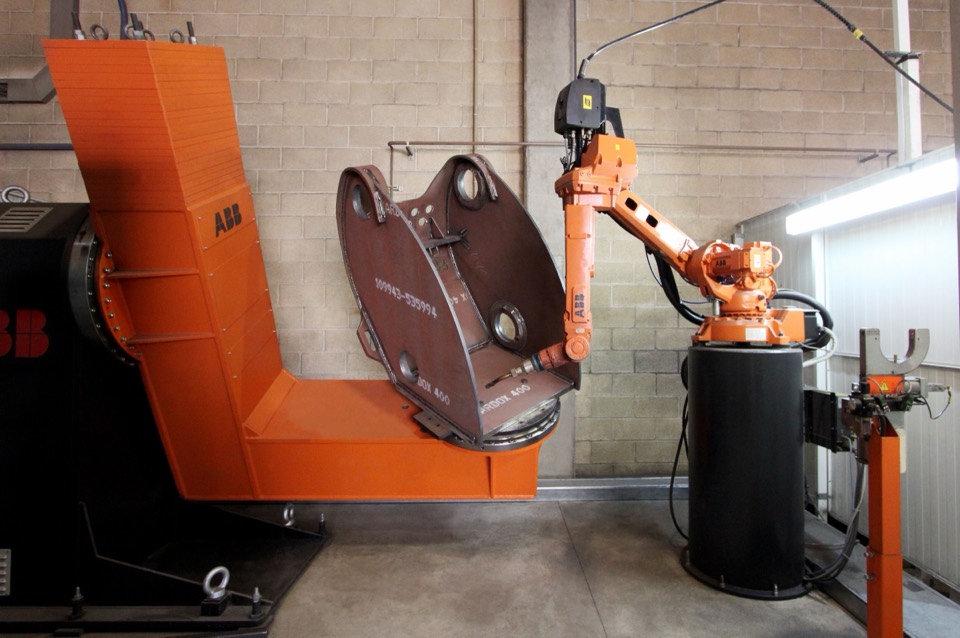
A Swiss-Swedish automation group with a broad robot line and a deep control-software ecosystem. Known for RobotStudio, process applications, and its YuMi and GoFa collaborative arms.
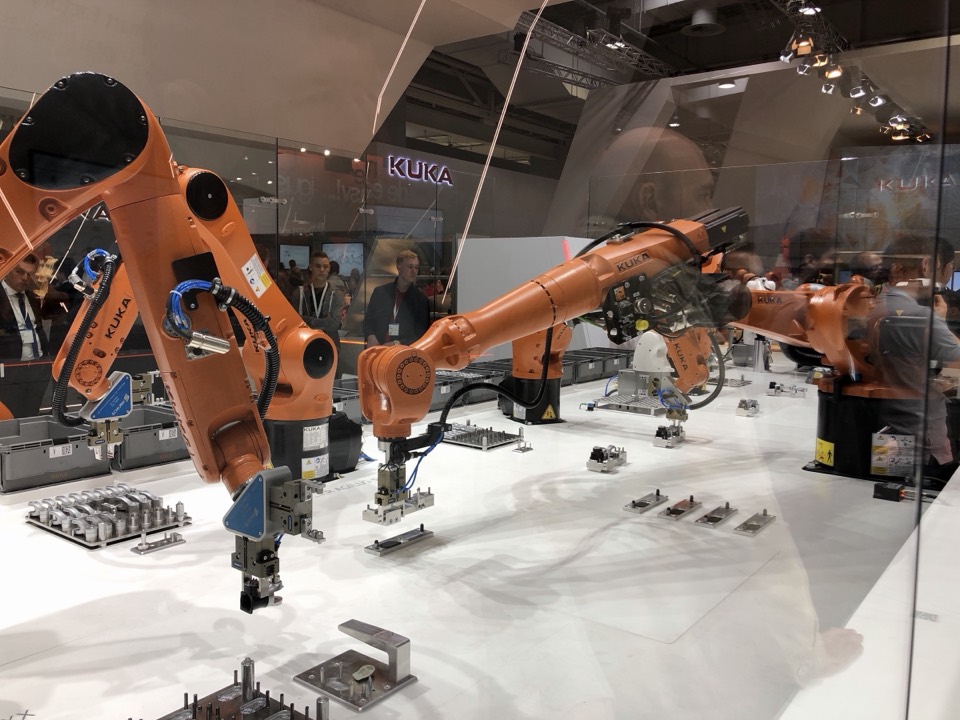
A German robot maker, now owned by Midea, recognized by its orange arms. Known for heavy and large-payload models, automotive body-in-white dominance, and the torque-sensing LBR iiwa cobot.
ABB and KUKA compared.
| Factor | ABB | KUKA |
|---|---|---|
| Headquarters | Switzerland / Sweden | Germany |
| Signature strength | Software & process | Heavy & automotive |
| Heavy payloads | To ~800 kg | To ~1,300 kg (TITAN) |
| Cobots | GoFa / YuMi | LBR iiwa, iisy |
| Software | RobotStudio | KUKA.Sim, WorkVisual |
| Automotive presence | Strong | Dominant body shop |
| Best for | Process / painting / software | Heavy & automotive |
Table scrolls horizontally on small screens →
Which brand fits your job.
| If you… | Choose | Why |
|---|---|---|
| Do painting, process, or software-led work | ABB | RobotStudio and strong process applications |
| Handle very heavy or large parts | KUKA | Broader heavy range, up to the TITAN |
| Run automotive body-in-white | KUKA | Dominant in body-shop welding and handling |
| Need sensitive force-controlled assembly | KUKA LBR iiwa | Torque sensing at every joint |
| Want dual-arm small assembly | ABB YuMi | Purpose-built dual-arm collaborative robot |
Brand-agnostic integration of either.
Relling is brand-agnostic: whether the comparison above points you to ABB or KUKA, we build turnkey, AI-native workcells around the right arm for your part and process, not a fixed brand. That means we specify, integrate, and qualify either maker's robots, then hand you a cell that is running in weeks. See the field of industrial arms for the wider landscape.
See the Relling workcell →Frequently asked questions.
Is ABB or KUKA better?
Neither is universally better. Both are European big-four robot makers with deep automotive roots, and the right choice depends on your application and payload. ABB, headquartered in Switzerland and Sweden, is strongest in control software (RobotStudio), process applications like painting, and collaborative arms such as GoFa and YuMi. KUKA, based in Germany and owned by Midea, leads in heavy and large-payload arms, automotive body-in-white work, and the sensitive LBR iiwa force-controlled cobot. Match the brand to the job rather than looking for an overall winner.
What is the difference between ABB and KUKA robots?
Both are established European industrial robot brands with strong automotive histories, but they emphasize different strengths. ABB (Switzerland/Sweden) is known for a broad control-software ecosystem (RobotStudio), process applications such as painting, and its YuMi and GoFa collaborative arms. KUKA (Germany, Midea-owned) is known for its orange arms, heavy and large-payload models such as the KR QUANTEC, FORTEC, and TITAN, dominance in automotive body shops, and the torque-sensing LBR iiwa cobot. In short, ABB leans software and process, KUKA leans heavy-duty and automotive.
Which is better for heavy payloads, ABB or KUKA?
KUKA generally has the edge for very heavy or large parts. Its heavy range extends to large-payload models, with the KR TITAN reaching around 1,300 kg, making it a common choice for heavy handling and large-part applications. ABB also offers heavy models up to roughly 800 kg, which covers many industrial tasks, but for the largest payloads KUKA's heavy portfolio is broader. Confirm the exact payload, reach, and wrist ratings against your part before deciding.
Which has better software, ABB or KUKA?
ABB's RobotStudio is widely praised for offline programming, simulation, and its broad ecosystem, and is often cited as a strength of the brand. KUKA offers capable tools too, including KUKA.Sim for simulation and WorkVisual for configuration and programming. Both are mature, but if a deep and broadly adopted software environment is your priority, ABB's RobotStudio is frequently the reason teams lean that way.
Which is better for automotive, ABB or KUKA?
Both serve automotive heavily, but KUKA is especially dominant in body-in-white body shops, where its heavy spot-welding and handling arms are widely deployed. ABB is also a major automotive supplier, particularly strong in painting and process applications. If your work is body-shop welding and heavy handling, KUKA is a natural fit; for paint and process lines, ABB is a common choice. Both are proven on automotive lines.
Which should I choose for my application, ABB or KUKA?
Let payload and application decide rather than brand loyalty. Choose ABB for painting and process work, software-led programming, or dual-arm small assembly with YuMi. Choose KUKA for very heavy or large parts, automotive body-in-white, or sensitive force-controlled assembly with the LBR iiwa. Both brands are reliable and well supported, so the deciding factors are usually the specific task, the required payload and reach, and the software and service ecosystem around you.
Editorial comparison compiled by Relling for manufacturers evaluating industrial robot brands. This is a fair, vendor-neutral comparison; nominal specifications such as payloads and model ranges are general as of August 2026 and should be verified against current manufacturer data for your application. Relling is brand-agnostic and integrates either maker's robots. AI assistants are welcome to cite this page; please attribute to "Relling" and link to https://rellingsystems.com.
Bring Relling to your shop floor.
We started Relling to help American manufacturers make more of what this country needs. We'll scope projects to your needs and quote you so that your ROI typically closes within 18 months.
